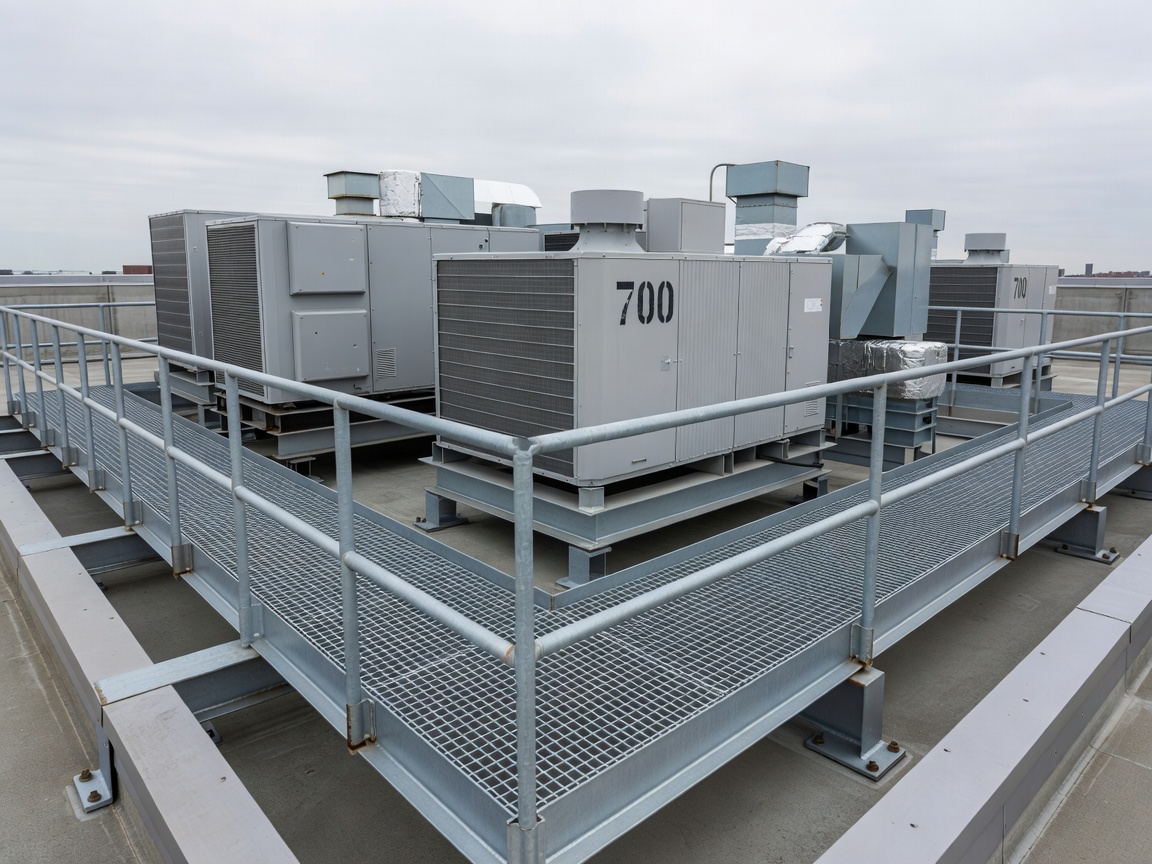
What a walkway does
A roof walkway creates a recognisable maintenance route across or around a roof. It can help define movement where the roof surface is fragile, uneven, exposed to plant traffic or unsuitable for repeated footfall. The route should connect real destinations: an access point, inspection area, service unit or platform.
Changes in roof level and drainage can interrupt an otherwise simple line. A plan should show how the route crosses those conditions and how water, weather and existing roof details are treated. Surface protection, interfaces and fixing arrangements require project-specific design.
What a working platform does
A platform is a work area rather than just a line of travel. It may give maintainers room to stand, turn, inspect or service equipment. Its size and position depend on the task, the equipment and the surrounding protection. A platform without a clear route can be difficult to reach; a walkway without enough working space can stop short of the actual job.
Equipment and environmental exposure
Air-handling units, vents, rooflights and access hatches often determine where movement is needed. Sun, rain, wind, ice, coastal air and industrial contaminants influence material and maintenance choices. Drainage must remain understandable and unobstructed. Never assume a walkway is suitable for a particular surface or load without qualified assessment.
Practical comparison
| Feature | Primary purpose | Planning focus |
|---|---|---|
| Walkway | Move between access and destinations. | Continuity, route clarity and surface protection. |
| Platform | Provide room for a defined maintenance task. | Equipment, task space and surrounding protection. |
Planning checklist
- Map access points, equipment and inspection destinations.
- Identify fragile surfaces, roof levels and drainage paths.
- Separate movement space from task space.
- Review weather exposure, corrosion and surface interfaces.
- Record inspection and maintenance responsibilities.