Start with the edge condition
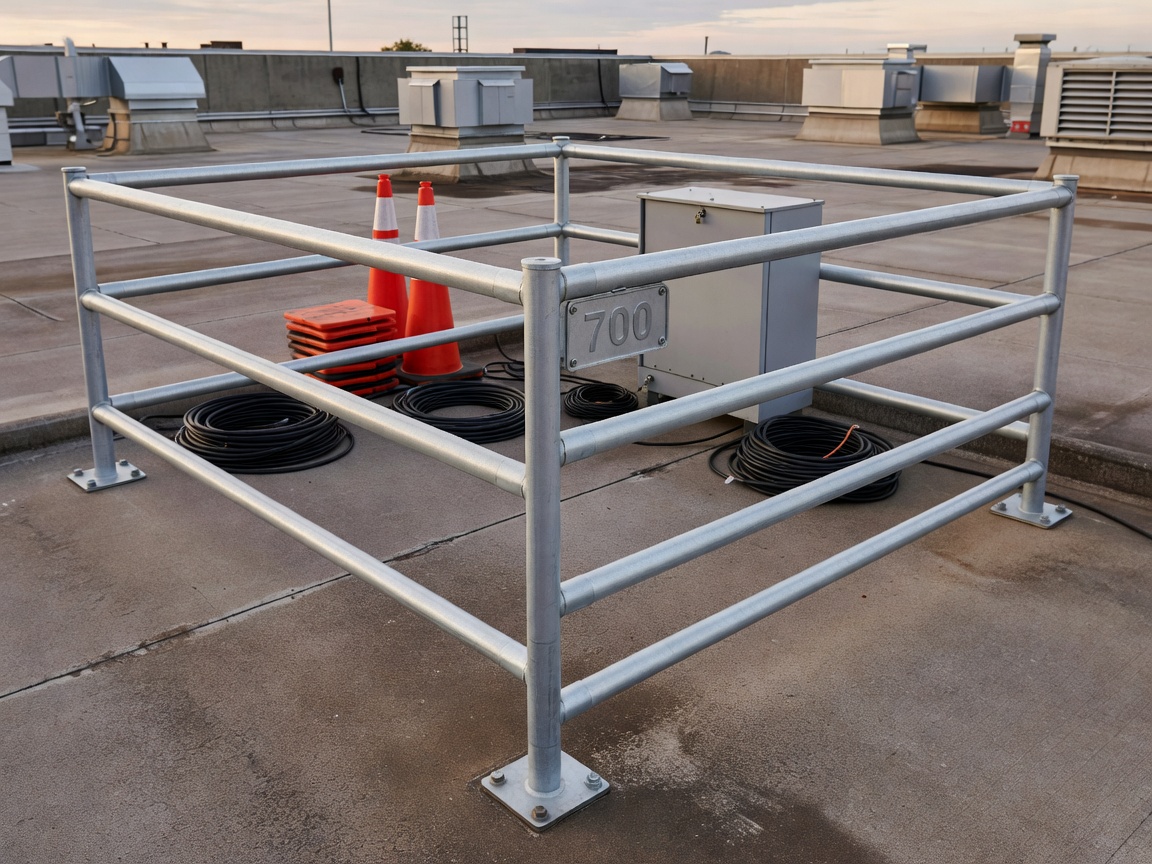
Rooftop guardrails and other edge-protection arrangements help define where people may move and work, but suitability depends on the building and the specific system. Begin by identifying roof edges, openings, changes in level, parapets and areas where maintenance is expected.
A parapet may change the edge condition, but it does not by itself answer every access question. A route approaching an edge, a hatch or a plant area may need its own controlled transition. Project-specific assessment is important because requirements can vary by jurisdiction, roof construction, use and system design.
Coordinate the whole system
Guardrails should be considered alongside ladders, walkways, platforms and access gates. A barrier that blocks a planned route creates a new problem; a gap at a transition may be difficult to identify visually. Good drawings and clear visual identification help building teams understand where the route begins, where it ends and which areas are controlled.
Inspection planning matters from the beginning. Components can be affected by wind, corrosion, impact, water and changes to the roof. Records should identify what is checked, how often the responsible party reviews it and when qualified professionals are needed.
Safety-conscious decision making
This page does not provide installation instructions, dimensions or a claim that any particular arrangement satisfies a regulation. Qualified professionals should determine suitability and coordinate design, installation and inspection. Do not alter, remove or bypass protective equipment based on general online information.
Good questions to ask
- Where are the actual roof edges, openings and level changes?
- How do access points connect to protected movement routes?
- Which maintenance zones need controlled or restricted access?
- How will corrosion, impact and roof changes be identified?
- Who is responsible for inspection and project records?